


All Aboard The Inca Trail
- Todd Homan

- Mar 12, 2022
- 5 min read
Alright Muse, it is time to, once again, stir from your opiate slumber. Time to whisper in my ear. I wish to remember our trip to Peru. Specifically, I would like to revisit the Inca Trail. So many years ago, 10 to be precise, but I have faith in you. Ah, there are the mists, forming into shapes before my very eyes, like Machu Picchu forming out of the morning mists at the Sun Gate. I remember:
The first day on the Inca trail was a beautiful sunny alpine day. We were in t-shirts and shorts and the air was dry. This is important, the Inca Trail passes through a number of ecosystems on its way to Machu Picchu. We headed out in a large group as guests in a G Adventures tour. Ahead of us native Peruvian porters, who are a requirement on the trail, had headed out in their t-shirts, shorts and flip flops, with packs almost taller and heavier than them, to deliver our tents and kitchens to the campsites ahead. They were the most impressive things to be found on the Inca Trail. Fit and friendly, tireless and committed, they were truly impressive human specimens, that put our stamina to shame throughout the days ahead.

The early trail is through a desert. There are cacti and small tufts of grass scattered all over the sand and stone that line the edges of the trail. What bushes and trees that do show up on the trail are small and sickly looking. This is a tough ecosystem, dry and hot. The flowers on the cacti sprinkled the landscape with color. The effect was beautiful. While nature’s handiwork was impressive, so were the ruins that we happened across as we walked.

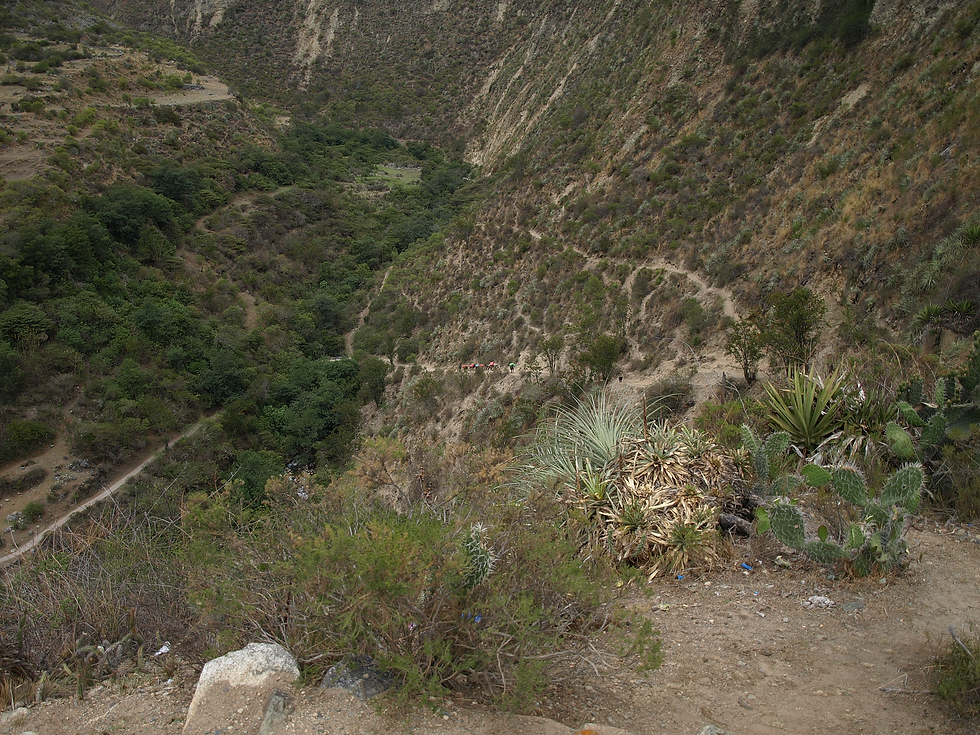
Every now and then on the trail, a valley would open up before you and evidence of thousands of years of habitation would make itself felt. Whether that evidence was the stone walls of ancient dwellings, or the terraces stubbornly carved into the mountainside. The effect was twofold, on the one hand it was humbling to see how determined and skilled the ancient Peruvians were, on the other it was devastating to see these impressive structures in a ruined state and really emphasized nature’s power and ability to set the wild world straight once again. I was forever cognizant that all of these ruins, indeed the very trail itself, had only 100 years prior to my visit, been completely hidden from view by the encroaching tendrils of nature.


It wasn’t long before the sand and stone, and cacti and tufts of grass, gave way to large evergreen trees and dense ferns and shade plants. Rivers and creeks would occasionally cross the trail, and small rustic bridges crossed them when required. To be honest, it felt very similar to walking in the foothills of Alberta. The trees and bushes were startlingly familiar and the rivers served up pools and eddies no different than the rivers off the forestry trunk road in Alberta.
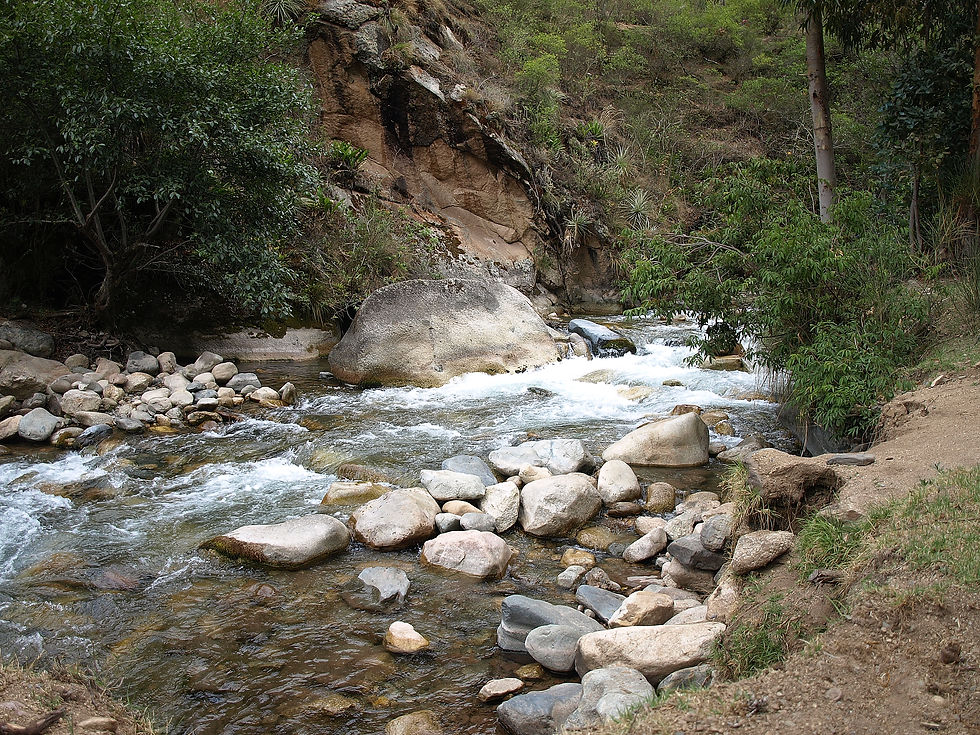
Soon we found ourselves at our first campsite. The porters, who move much quicker than tourists on the trail, had our tents pitched and a meal prepared. The first day was a success and we were given a lovely meal and retired to our tents with sore feet, stiff muscles, and a general feeling of having worked hard and been exposed to something very special. The following day was to be far more challenging, day two is ascending Dead Woman’s Pass, the most trying day on the trail.
The difficulty of Dead Woman’s Pass is found in the complete lack of pictures from the ascent. I never took a single picture until the top of the trail. Here is a summary of what you do on the way up Dead Woman’s Pass. You put your left foot in front of your right, and then your right in front of your left. The lack of oxygen at that elevation, coupled with the angle of incline is enough to leave you focused on steps rather than looking around. A mouth full of cocoa leaves and the frequent passage of a trotting porter, were the motivation that kept me moving, but moving was all I had and my eyes were two feet in front of me the whole time. I am sure there was lots to see, but I never saw it.
But we made it:
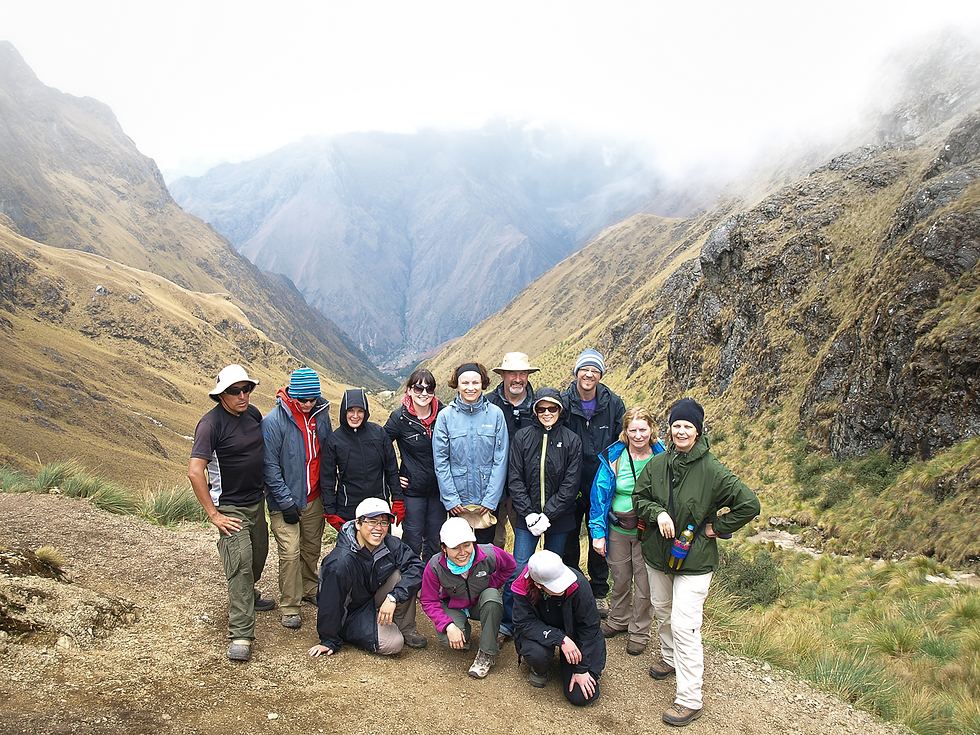
One thing I did not consider is that the descent from the pass would be more difficult than the road up. It was, it was brutal on our knees. The steps the Inca carved out are large, sometimes 16 to 20 inches tall. This is a nice feature for climbing, but hard on the body going down. Bring poles, they will save your life.
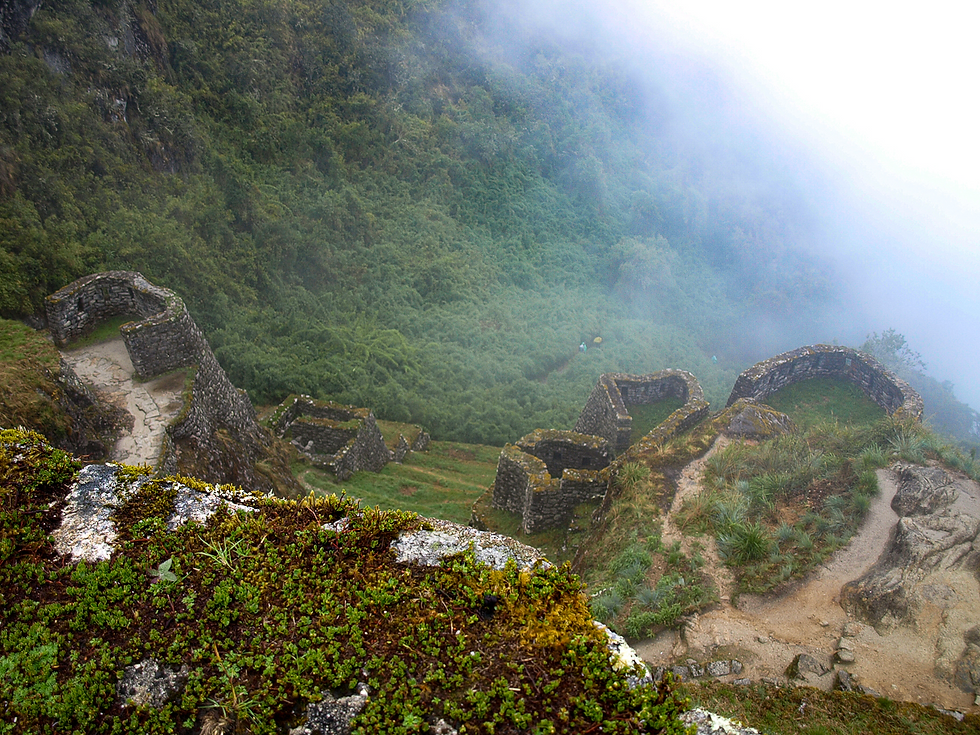
The following day was my favorite of the hike. The back side of the pass is right in the heart of the cloud forest, and that environment was much more alien and fun to explore. Plus it never hurt that, from time to time, the mists would part on a fort or village carved into the mountain side. When the foliage is dense and the atmosphere is clouds, the ruins look that much more exotic. The most striking of these ruins is Sayacmarca. It is so alien, it feels like being on a movie set. See below:
The final day is the quick jaunt from the campsite to the Sun Gate for sunrise. You are woken up at 4 in the morning and line up like cattle in a gate for the privilege of being the first through the sun gate. The goal is to watch Machu Picchu emerge out of the mists in the morning light. It was a little slow for us, and rained for a good portion of the morning, but eventually it cleared up and we were gifted the bird’s eye view of Machu Picchu. I think it was worth the rain and cold. My wife would tell you different.
At the Sun Gate, waiting for the mists to lift:

And waiting…

And finally…

The tour of Machu Picchu that followed was incredible. As a peace offering to my wife, I put the camera away and we explored. Eventually, the rain returned and we went on our way. Our next stop was the Amazon Rain Forest and river basin.

My wife and I have contrasting opinions of the Inca Trail: She found it cold wet and too much work and would have rather taken the train directly to Machu Picchu, rather than hiking the 48 kms required to come in via the sun gate. I disagree and felt that most of the best parts were on the trail. Luckily our differences of opinion never ruined our marriage, but I would say there were definitely some dodgy moments as I walked ahead on the trail and my wife followed behind at a distance that was set by the length of our legs, and some marital frustration. In the end, we persevered, however, and lived to tell the tale. This is that tale.


Comments